




Dennis Boatwright, II
Political Activist





Rescuing the Legacy of Dr. John Henrik Clarke

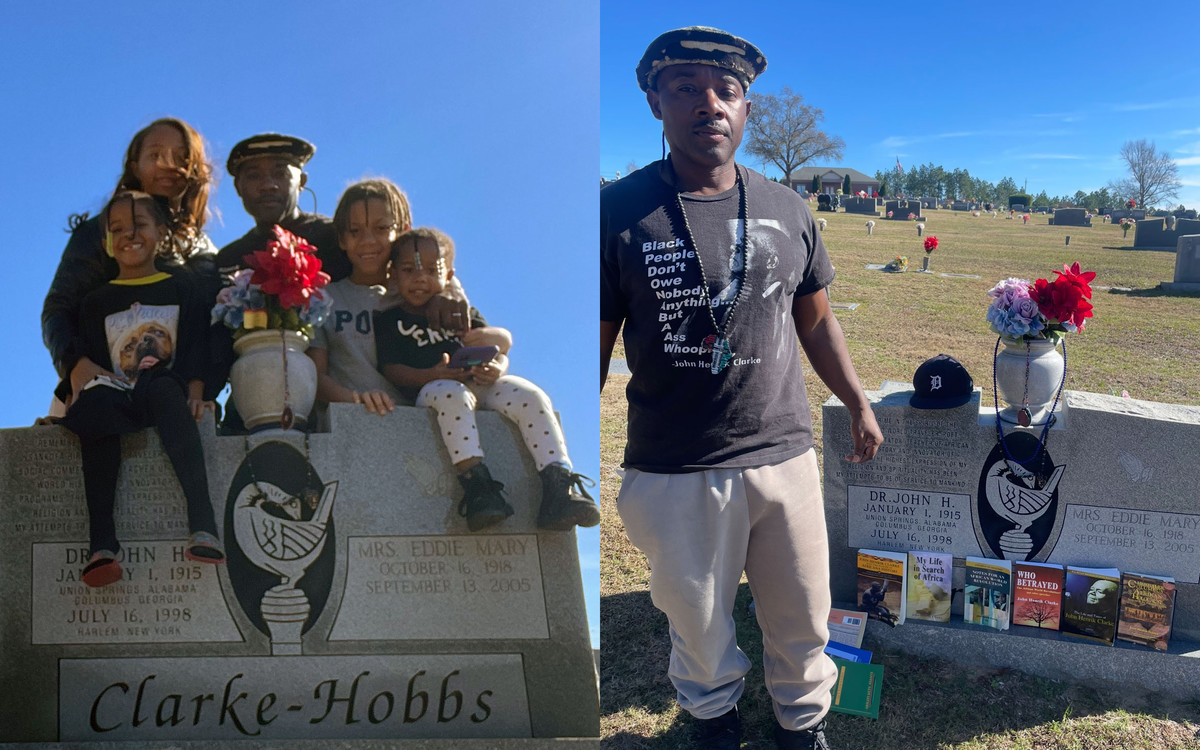
Main Photo: Detroit family pays homage to Dr. John Henrik Clarke at his gravesite in Columbus, Georgia (2023)
In May 2021, at Commodore Barry Park in Brooklyn, New York, I publicly responded to critiques made by Dr. Marc Lamont Hill concerning the work of Dr. Frances Cress Welsing, particularly The Isis Papers: The Keys to the Colors.¹ After leaving the African Liberation Day festival and entering the New Jersey Turnpike on my drive back to Detroit, I received a phone call that proved deeply affirming.
The call came from Prof. James Small, an African-centered scholar who had witnessed my exchange with Dr. Hill. In a lighthearted tone, he remarked:
“You guys in Detroit are something else. You bloodied his nose already, but you still wanted to knock him out.”
Near the end of our conversation, I shared a long-held regret: I had never met Dr. John Henrik Clarke in person, largely due to legal constraints that limited my movement for nearly a quarter-century. Prof. Small responded with words that remain among the greatest compliments I have ever received:
“Son, you are closer to Dr. John Henrik Clarke than many people who sat in his classrooms or ate lunch with him every day.”
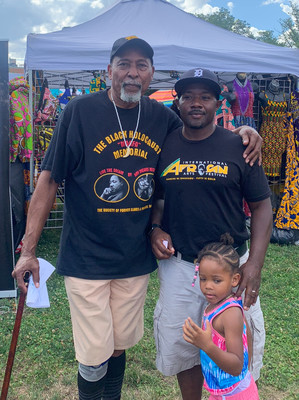
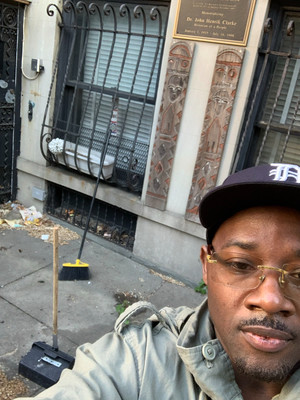
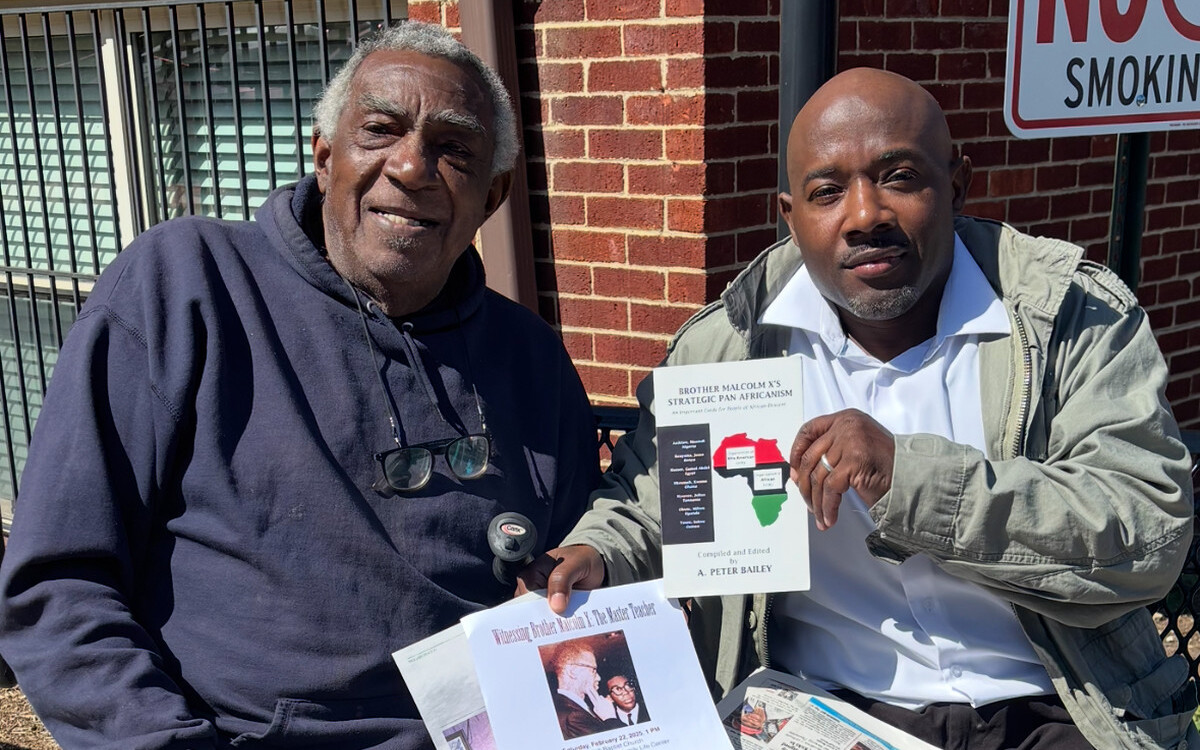
From that moment on, I felt a renewed responsibility to represent Dr. Clarke’s views carefully and faithfully. I am indebted to mentors and comrades—particularly Dr. Arthur Lewis, Dr. James McIntosh, and Charles Asukile Mitchell—who shared firsthand accounts of Clarke’s life and spirit that no book or video could fully capture.
Prof. Small’s words also underscored a broader historical truth: later generations often preserve great thinkers more faithfully than some who were closest to them. Distance can sharpen clarity. History offers many examples, including Aristotle, whose work was lost or neglected after the fall of the Roman Empire, only to be revived centuries later by scholars such as Thomas Aquinas, who elevated it to new intellectual heights.² In that same spirit, those who genuinely seek to build upon Clarke’s work today have a duty to protect his legacy from dilution, distortion, and opportunism.
This article—and the work of The Center for Pan-African Studies—exists to ensure that Dr. Clarke’s teachings neither fade nor are misrepresented by those who benefit socially or financially from invoking his name while abandoning his discipline, principles, and selfless spirit.
A brief note on why Clarke mattered—and still matters
Dr. John Henrik Clarke is widely regarded as one of the most revered and influential African-centered scholars among African-descended people on the continent and throughout the Diaspora. His accomplishments are well documented, yet a brief overview helps explain why he earned the title “Master Teacher.”
Born in Silver Springs, Alabama, in 1915, Clarke credited his early intellectual formation to family influences—particularly stories told by his great-grandmother and accounts of his great-grandfather’s resistance to enslavement.³ A defining moment occurred when a white lawyer told him that he “came from a people with no history.” Clarke rejected that lie and committed his life to disproving it. With only a seventh-grade formal education, he became one of the most formidable self-trained scholars of the twentieth century, dedicating himself to restoring African people to their rightful place in world history.
Clarke’s impact emerged early. At age 23, while living in Harlem, he wrote “The Boy Who Painted Christ Black,” later adapted into a film segment.⁴ According to A. Peter Bailey, co-founder of the Organization of Afro-American Unity (OAAU), Malcolm X and others sought Clarke out—rather than the reverse. His association with the OAAU matters not for prestige, but because it reflects his seriousness as a Pan-African institution builder committed to strategy, discipline, and liberation.
The problem: name association without full disclosure
Dr. Clarke is often remembered narrowly as a historian, with his legacy confined to particular subject areas such as Dynastic Egypt or Ghana. This framing is incomplete. Clarke was not merely an academic historian. Like Malcolm X, he was a Pan-Africanist whose scholarship was inseparable from political commitment, institution-building, and global solidarity.
While some of Clarke’s former students and admirers have carried this legacy forward with integrity, others have relied on proximity to him as a credential rather than treating his work as a discipline. I do not object to people earning honest income through educational or cultural work. The concern arises when Clarke’s name is invoked while his Pan-African politics are minimized, or when individuals act as informal gatekeepers—restricting conferences and commemorations to agreeable social circles rather than principled alignment and serious study. In these cases, Clarke’s teachings are not preserved; they are quietly distorted.
Clarke’s self-definition: nationalist and Pan-Africanist
In My Life in Search of Africa, Dr. Clarke stated plainly:
“I am a nationalist, and a Pan-Africanist, first and foremost.”⁵
This statement is not rhetorical; it is interpretive. To ignore it is to misunderstand him.
Pan-Africanism, as Clarke understood and practiced it, operated on three levels. First, it was a unity concept: African-descended people share a common origin and a linked historical destiny. Clarke rejected ideologies that sever Africans from African Americans or treat Africa as irrelevant to Black life in the United States.
Second, Pan-Africanism was a scholarly project—an intellectual commitment to restoring African people to world history through African agency. This required that African-descended scholars guide Black and African Studies, rather than allowing the discipline’s purpose to be diluted or redirected.
Finally, Pan-Africanism was a liberation instrument. It was unapologetically political, aimed at power, unity, and self-determination. As Clarke stated in a 1981 PBS interview:
“Education has but one honorable purpose, and that is to train people to be responsible handlers of power.”⁶

A Pan-African Nationalist, therefore, is not simply “African-centered” in culture or curriculum. Pan-Africanism demands control of political destiny, institutional independence, and strategic unity—especially where African-descended people form a majority.
Why “African-centered” is not automatically “Pan-Africanist”
A persistent misunderstanding today is the assumption that African-centeredness and Pan-Africanism are interchangeable. African-centeredness is an important prerequisite, but Pan-Africanism is a strategic political posture rooted in the commitment to end the oppression of African-descended people.
This distinction matters because many African-centered educators do not operate from a Pan-African political framework. Their limitations become visible in how they interpret contemporary African struggles, including sovereignty movements in the Sahel. Clarke, by contrast, practiced Pan-Africanism as action. He treated African independence not as distant news, but as shared responsibility.
Pan-African nationalists hold that wherever African-descended people are a majority, they must pursue political, economic, and cultural control consistent with self-determination. Anything less risks becoming a refined form of neo-colonialism.
“No friends”: strategy, caution, and confidence
Clarke also offered sobering guidance regarding alliances. His assertion that Black people “have no friends” was not a call to despair, but a discipline of strategy. He did not oppose cooperation; he demanded clarity, leverage, and self-reliance. As he put it:
“If you are looking for a friend, go look in the mirror.”⁷
Had this discipline been consistently applied, Black-led movements might have better guarded against the recurring pattern in which momentum is redirected, diluted, or absorbed by interests that do not prioritize African-descended people—from the reparations struggle to the post-2020 political landscape following the murder of George Floyd.
To honor Dr. Clarke’s legacy, we must move beyond ceremonial praise and return to his most urgent framework: the inseparable link between education, power, and liberation—and Pan-African unity as strategy, not sentiment. Clarke summarized it best himself:
“Pan-Africanism or perish.”⁷
- African Diaspora News Channel. July 11, 2021. Marc Lamont Hill Confronted By The Streets Over His Disrespect Of Dr. Frances Cress Welsing
- Peikoff, L. (n.d.). The Dark Ages, Medieval Scholasticism and the Rediscovery of Aristotle. Ayn Rand University. https://courses.aynrand.org/campus-courses/history-of-philosophy/the-dark-ages-medieval-scholasticism-and-the-rediscovery-of-aristotle/#:~:text=Leonard Peikoff discusses the stagnant,century between 1150 and 1250
- Clarke, J. H. (1970, May). A search for identity. In Collected writings of John Henrik Clarke (Web ed., pp. 13–19).
- Duke, B. (Director). (1996, February 17). The boy who painted Christ black [Film segment]. In D. Knoller (Producer), America’s dream [TV movie]. HBO Films.
- Clarke, J. H. (1999). My life in search of Africa. Third World Press, (p. xi)
- South Carolina ETV. (2024, May 16). Dr. John Henrik Clarke – Harlem, Part 2 (1981) [Video]. For the People. PBS
- Clarke, J. H. (1991). “You Have No Friends” lecture.
Posted: Thu, Jan 1