

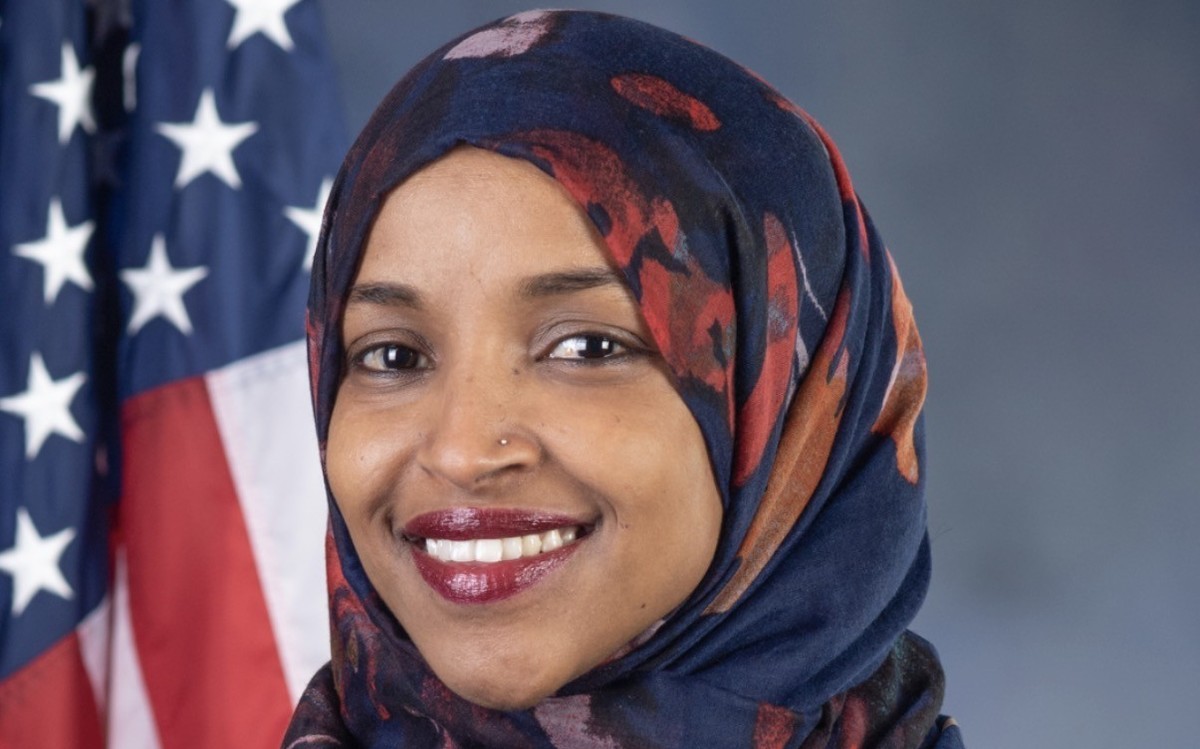



Dennis Boatwright, II
Political Activist
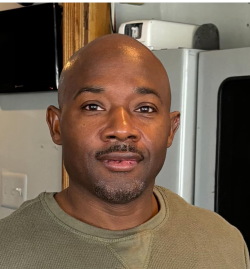



Stand With Rep. Ilhan Omar: Defend Justice, Due Process, and the Right to Dissent

The Pan-African community, people of conscience across the United States, and allies around the world should speak clearly in support of U.S. Representative Ilhan Omar and against the Trump administration’s escalating use of federal power against a prominent Black, African-born, Muslim woman in Congress. Whatever questions may exist in any investigation, no public official should be subjected to political intimidation, selective enforcement, or the appearance of state power being deployed to silence dissent.
A Dangerous Escalation
On October 12, 2026, federal agents from Homeland Security Investigations searched Representative Omar’s Washington, D.C.-area home under a court-authorized warrant as part of an ongoing federal criminal investigation. The Justice Department confirmed the search but provided few details; Representative Omar has not been charged with a crime.
Reports indicate that investigators have also seized her phone and issued more than a dozen grand jury subpoenas, including to members of her family, in connection with allegations concerning immigration paperwork. The timing weeks before the November midterm elections, in which Representative Omar is seeking reelection—has intensified concerns that the action is intended not merely to investigate, but to intimidate a political opponent.
Representative Omar has forcefully rejected the allegations and described the search as “an attempt to target political enemies and weaponize federal law enforcement.” Her response reflects a broader principle: a democracy cannot survive when the machinery of government becomes an instrument of retaliation against those who challenge power.
Why Representative Omar Deserves Support
Representative Ilhan Omar’s story is inseparable from the African diaspora’s story of displacement, resilience, and democratic participation. A Somali American refugee who became a U.S. citizen and later one of the first Muslim women and first Somali Americans elected to Congress, she has brought the experiences of African immigrants, refugees, and marginalized communities into the center of American public life.
She has also been an outspoken advocate on issues that matter deeply to Africa and its diaspora: peace in Sudan, humane immigration policy, civil rights, international human rights, and a more just U.S. relationship with the African continent. As chair of the U.S. Africa Policy Working Group, she has helped elevate African perspectives in congressional policy discussions.
For these reasons, an attack on her dignity, safety, and political rights cannot be treated as a private matter or an ordinary legal event. It is a warning to every community that dares to organize, vote, speak, and demand accountability.
The Principle at Stake
This is not a request that anyone be above the law. It is a demand that the law not be used as a weapon.
A legitimate investigation must be guided by evidence, neutrality, proportionality, and respect for constitutional protections. It must not be shaped by a president’s personal animus, timed for electoral advantage, or conducted in a manner that humiliates and isolates a lawmaker because of her identity, faith, race, gender, or political views. Reports that a judge limited the Justice Department’s access to Representative Omar’s records because of her status as a member of Congress underscore the constitutional stakes involved.
The universal moral standard is simple: truth must be pursued without cruelty; power must be restrained by justice; and every person especially the vulnerable and the politically targeted must be treated with dignity. When government institutions abandon balance and become tools of vengeance, they violate the ethical foundation on which both democracy and human civilization depend.
A government watchdog has already filed a Hatch Act complaint alleging that the raid was intended to influence the midterm elections. The Hatch Act prohibits executive-branch employees from using their official positions to influence election outcomes. These allegations require independent scrutiny, transparency, and accountability.
A Call to the Pan-African Community
The Pan-African community must recognize this moment as part of a long historical pattern: Black and African leaders who challenge entrenched power have often faced surveillance, defamation, criminalization, and attempts to discredit their legitimacy.
We must therefore stand with Representative Omar not because we accept every claim made by any side, but because we defend the principles that protect us all:
- Due process: No person should be presumed guilty by headlines, political officials, or social-media campaigns.
- Equal protection: Federal power must not be applied more harshly to political opponents, immigrants, Muslims, Black people, or African diaspora communities.
- Political freedom: Elected representatives must be able to speak, legislate, and seek reelection without fear of state retaliation.
- Family dignity: Subpoenas and enforcement actions that reach into family life must be handled with extraordinary restraint and transparency.
- Democratic accountability: The public deserves to know whether federal institutions are being used for partisan or personal political purposes.
Silence in the face of such escalation would send a message that intimidation works. It must not.
A Call to the World
The world is watching. The United States presents itself as a defender of democracy, rule of law, and human rights. Those ideals are tested not in comfortable moments, but when a government is tempted to punish its critics.
Pan-African organizations, civil-rights groups, faith communities, immigrant-rights advocates, scholars, students, labor unions, and elected officials should demand:
- Full transparency regarding the legal basis, scope, and timing of the investigation and search.
- Independent review of whether federal enforcement was politicized or coordinated to influence the election.
- Protection of Representative Omar’s constitutional rights, including her rights as a sitting member of Congress.
- An end to dehumanizing rhetoric that portrays African immigrants, Muslims, and political dissenters as inherently suspect.
- Solidarity with all communities facing discriminatory or politically motivated use of state power.
We Will Not Be Intimidated
Representative Omar has said she will not be silenced. Neither should we be.
The defense of Ilhan Omar is a defense of the principle that no government may convert public institutions into private weapons. It is a defense of the African diaspora’s right to belong, participate, and lead. And it is a defense of democracy itself.
Let the Pan-African community, the people of Minnesota, and all people who believe in justice declare plainly: **we see what is happening, we reject political intimidation, and we stand with Representative Ilhan Omar.
Posted: Wed, Oct 14